
If you've shopped around for exterior cleaning, you've seen both terms — soft wash and pressure wash — often used as if they mean the same thing. They don't. Choosing the wrong one is the single most common way homeowners damage their own render, paint, roof or timber.
What soft washing actually is
Soft washing is a chemistry-driven clean. A diluted solution — usually sodium hypochlorite with a surfactant to help it cling — is applied at low pressure, left to dwell, then rinsed off. The cleaning work is done by the chemistry, not by water force. Pressures sit roughly at the level of a garden hose. Soft washing is how we clean a painted render wall or a tiled roof safely.
What pressure washing actually is
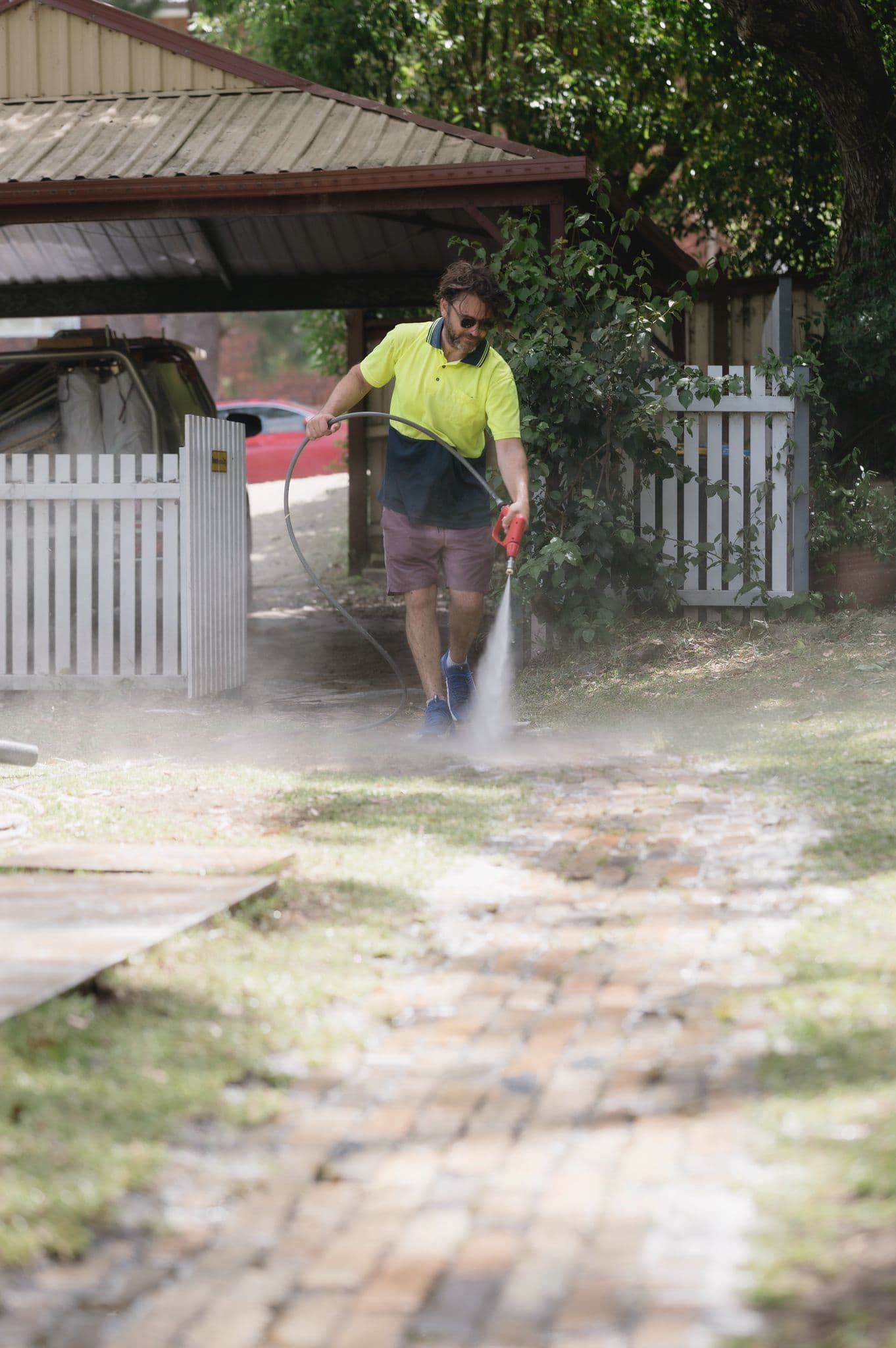
Pressure washing uses mechanical force — high-pressure water, typically 2,000 to 4,000 PSI, often through a rotary surface cleaner on flat concrete — to physically blast grime off a hard surface. It's the right tool for driveways, paths, heavy-duty concrete and some paver jobs. It's the wrong tool for almost anything with a coating on it.
Which method belongs on which surface
- Roof tiles and Colorbond — soft wash only.
- Painted render, weatherboard, Hardiplank, face brick — soft wash.
- Concrete driveways, paths and garage pads — pressure wash (usually with a rotary surface cleaner).
- Pavers — pressure wash at sensible pressure, with care around jointing sand.
- Sandstone — soft wash or very controlled low pressure only.
- Timber decking — low pressure with the grain, or soft wash with appropriate cleaner.
What goes wrong when you mix them up
High pressure on a painted render wall strips paint in seconds. On a tile roof it chips glaze, forces water under laps, and can shift ridge cap mortar. On weatherboard it blasts water behind joins that were never sealed against that. On sandstone it pits and scars the face. We see these jobs all the time — usually after someone's neighbour borrowed a pressure washer for the weekend.
How a proper operator decides
On every job the first question is: what am I cleaning, and what's it coated with? That decides the method. From there it's about dilution, dwell time and rinse — not just turning the machine up. A good exterior wash is boring to watch. That's usually a sign it's being done right.
Not sure what your place actually needs? We'll walk the property and recommend the right method — no upsell.
Get an honest quote